


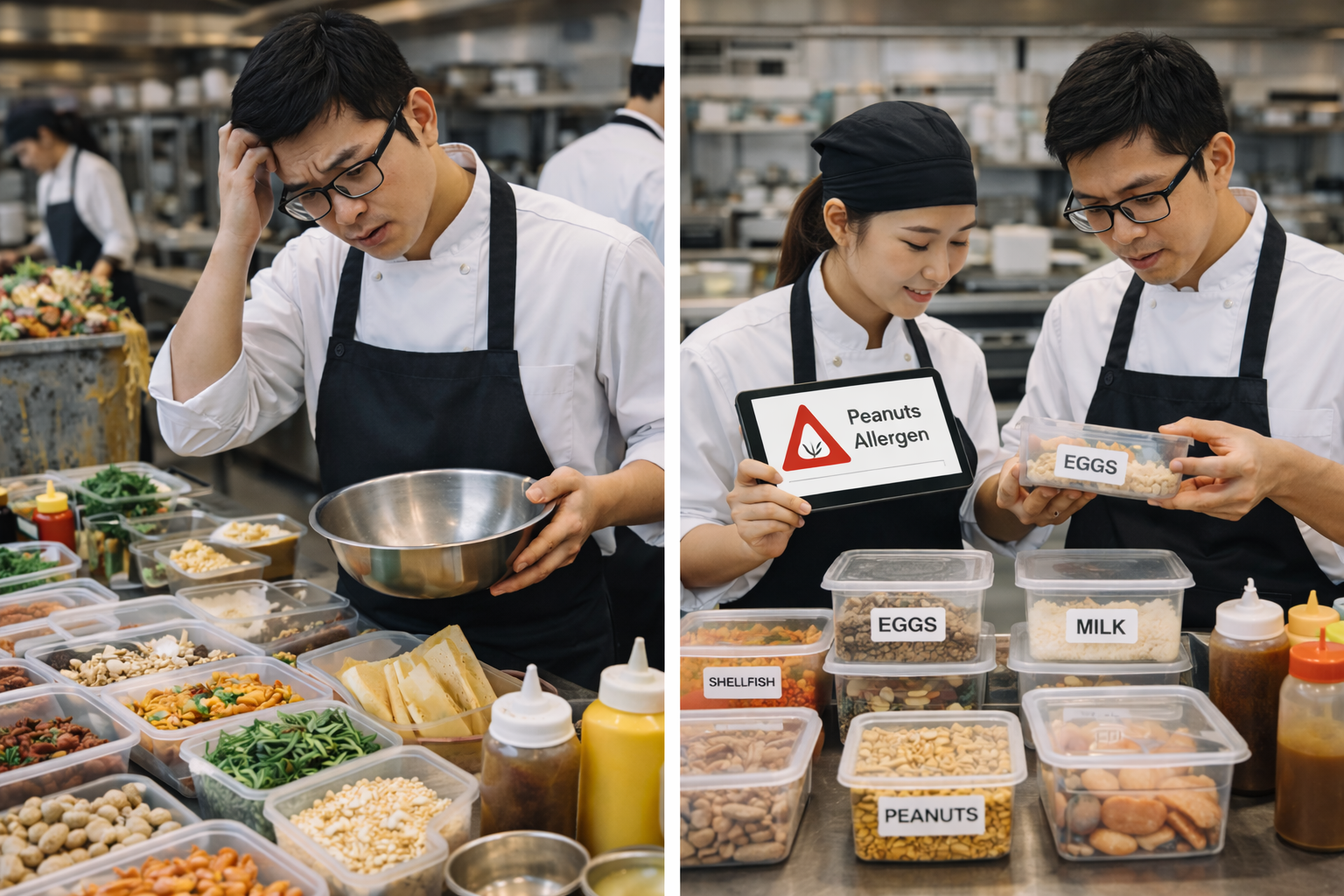
Managing F&B Allergy Risks for Safer Food Operations
Food allergy risks pose a critical challenge for the food and beverage (F&B) industry, impacting both customer safety and brand reputation. With food allergies affecting an estimated 10% of the global population, F&B operators must prioritize rigorous allergy risk management to prevent harmful reactions and ensure regulatory compliance. This article explores the pressing challenge of F&B allergy risks, why they arise, and how modern ERP solutions like Codemax Smart F&B ERP enable safer, more transparent operations.
The Challenge of F&B Allergy Risks
Food allergies in customers can trigger severe, life-threatening reactions. For F&B operators, this translates into stringent demands for allergen control at every stage—from sourcing raw ingredients to food preparation and delivery. Despite this, incidents of cross-contact contamination and inaccurate allergen labeling remain common. According to studies, food allergy-related recalls and complaints have increased in recent years, leading to costly legal liabilities and loss of consumer trust.
The complexity of modern food supply chains exacerbates these risks. Operators managing multiple outlets, central kitchens, and wide-ranging menus face difficulties tracking allergen presence and preventing contamination. Moreover, evolving regulatory frameworks worldwide impose strict standards for allergen management, liability disclosures, and traceability.

Why F&B Allergy Risks Happen
Several root causes contribute to F&B allergy risks:
- Cross-Contamination: Shared kitchen equipment, utensils, or surfaces can transfer allergens unintentionally.
- Incomplete Allergen Knowledge: Staff may lack proper training to identify and handle allergenic ingredients safely.
- Supplier Variability: Inconsistent ingredient disclosures and hidden allergens in raw materials from suppliers.
- Menu Complexity: Large menus with varied recipes increase the challenge of accurate allergen tracking.
- Manual Processes: Paper-based record-keeping and manual labeling increase human errors and delays in information flow.
Together, these factors create a hazardous gap in allergen control that can lead to operational failures and customer harm.
Solutions & Best Practices for Managing F& Allergy Risks
To mitigate allergy risks, F&B operators should adopt comprehensive strategies integrating hygiene protocols, staff training, and technology-driven controls:
- Strict Cross-Contamination Controls: Implement dedicated utensils, cookware, and preparation areas for allergen-free foods.
- Allergen Identification and Labeling: Clearly mark menus and packaging with allergen information backed by verified ingredients.
- Supplier Verification: Conduct rigorous supplier audits and require detailed allergen declarations for all raw materials.
- Staff Training & Awareness: Provide ongoing education on allergen risks, handling procedures, and emergency responses.
- Standardized Workflows: Develop and enforce standardized recipes and portion controls to reduce variation and unknown ingredients.
- Customer Communication: Enable transparent communication channels for customers to disclose allergies and ensure orders reflect their needs.
Technology’s Role in Reducing Allergy Risks
Modern ERP systems like Codemax Smart F&B ERP revolutionize allergen management by offering end-to-end traceability and operational control. Key technology benefits include:
- Ingredient-Level Traceability: Track allergens from inbound raw materials through production to the finished menu item, ensuring no hidden allergens.
- Automated Allergen Labeling: ERP platforms generate allergen labels automatically by cross-referencing ingredients, reducing manual errors.
- Real-Time Data Access: Kitchen staff and front-of-house teams have instant access to allergen data for quick verification and accurate order handling.
- Supplier Management Integration: ERP connects supplier data to inventory, flagging high-risk ingredients and enabling swift recall actions if needed.
- Standardized Recipe Management: Digital recipe controls ensure consistent allergen content for each dish, even when scaling production.
- Audit Trail and Compliance Reports: Automated logging of allergen checks and controls supports regulatory audits and internal quality assurance.
By harnessing these features, operators reduce allergic reaction incidents and demonstrate they prioritize customer safety.

Real-World Impact: Allergy Risk Management in Action
Consider a central kitchen supplying multiple restaurant outlets. Before ERP adoption, allergen tracking was manual and prone to cross-contact incidents, leading to customer complaints and costly food waste from returned orders. After implementing Codemax Smart F&B ERP:
- Ingredient allergen profiles were digitized, enabling precise order customization.
- Automated alerts warned kitchen staff of allergen presence during production runs.
- Supply chain integration ensured high-risk ingredients triggered additional safety checks.
The result was a 40% reduction in allergy-related issues within the first year, improved customer satisfaction scores, and streamlined compliance reporting that passed health audits effortlessly.
Common Mistakes to Avoid in Allergy Risk Management
Overlooking Staff Training: Without continuous education, human errors persist despite technological tools.
- Ignoring Supplier Risk: Failing to verify allergens from suppliers creates uncontrolled risks.
- Inadequate Communication: Frontline staff must have clear access to allergen data to prevent mistakes.
- Underestimating Menu Complexity: Expanding menus without simultaneous allergen control measures increases risks sharply.
- Relying Solely on Manual Records: Paper logs are slower, error-prone, and non-scalable in complex operations.
Conclusion
Effectively managing F&B allergy risks requires a multifaceted approach combining operational best practices with technology-driven solutions. Key takeaways include:
- Food allergy safety is non-negotiable for F&B operators due to customer health and regulatory demands.
- Cross-contamination prevention, staff training, and supplier verification form the foundation of allergen control.
- Advanced ERP systems like Codemax Smart F&B ERP provide comprehensive traceability and control to mitigate allergy risks.
- Implementing these solutions leads to fewer incidents, enhanced customer trust, and smoother compliance with food safety regulations.
Stay ahead in the evolving F&B landscape by embracing robust allergy risk management practices. Learn how Codemax Smart F&B ERP can help optimize your operations for maximum safety, efficiency, and peace of mind.