


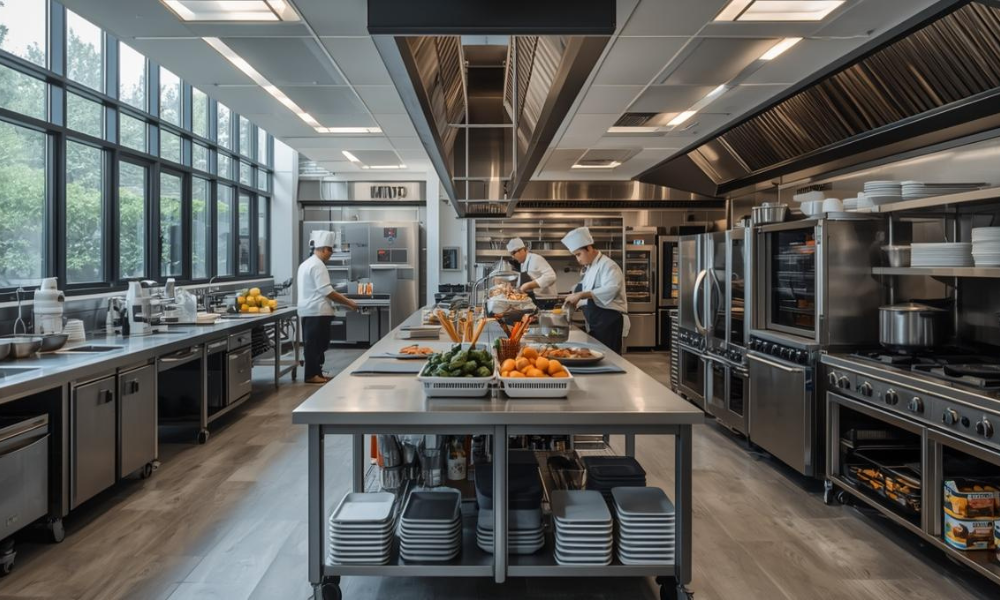
In today’s fast-paced food and beverage (F&B) industry, central kitchens serve as the backbone for large-scale production, enabling restaurant chains, cloud kitchens, and food manufacturers to meet high demand with consistency and speed
However, the complexities of managing inventory, production scaling, and supply chain traceability often lead to operational bottlenecks, food wastage, and compliance challenges. Central kitchen ERP solutions have emerged as powerful tools that address these issues by integrating end-to-end processes under one digital platform. This article explores how adopting a central kitchen ERP can transform your F&B operations—boosting efficiency, enhancing traceability, and reducing costs—while positioning Codemax Smart F&B ERP as a leading solution tailor-made for these demands.
The Challenge: Complex Central Kitchen Operations and Their Impact
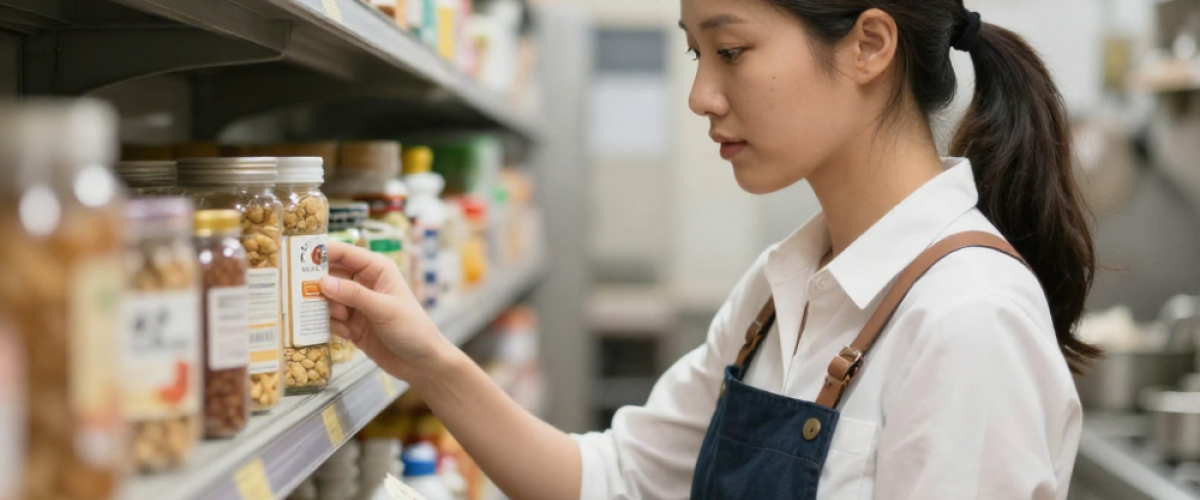
Central kitchens handle vast volumes of raw materials, manage multiple recipes, and deliver products simultaneously to various outlets. According to industry reports, food wastage in centralized production can reach up to 20% due to overproduction, spoilage, or inaccurate batch tracking. In addition, manual inventory management frequently results in stock-outs or overstocking, inflating operational costs and reducing margins. The lack of real-time data visibility impairs quick decision-making, limiting a kitchen’s ability to respond to shifts in demand or supplier delays effectively. These inefficiencies often lead to compromised food quality, missed regulatory compliance, and customer dissatisfaction.
Why This Happens: Root Causes in Central Kitchen Operations
Several factors contribute to struggles common in central kitchen management:
- Fragmented Systems: Disparate software for inventory, production, and order management creates data silos and manual reconciliation errors.
- Manual Processes: Reliance on spreadsheets and paper records causes delays, mistakes, and difficulty tracking batch yields or expiry dates.
- Demand Variability: Fluctuations in orders across multiple retail outlets challenge forecasting accuracy, often resulting in misaligned production schedules.
- Traceability Gaps: Without integrated tracking, it is hard to pinpoint the source of food safety issues or quickly conduct recalls.
- Regulatory Pressure: Compliance with food safety standards requires detailed audit trails and documentation, difficult to maintain without automation.
Understanding these underlying issues highlights the critical need for a unified, digital solution designed for the F&B supply chain’s nuances.
Solutions & Best Practices for Central Kitchen Efficiency
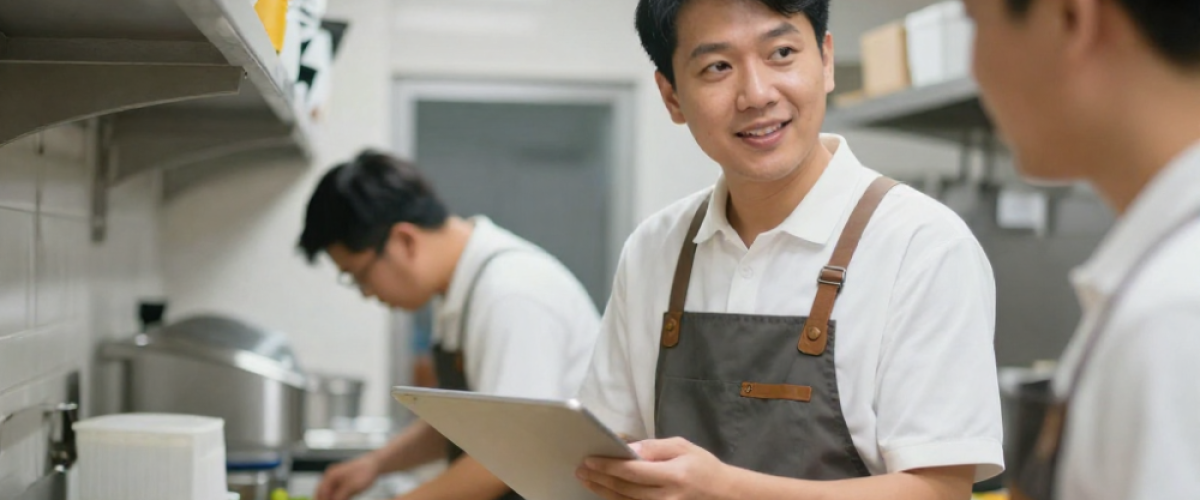
F&B operators can overcome these challenges through targeted strategies:
- Implement Recipe Scaling Tools: Standardize recipes and scale batch sizes automatically based on demand forecasts to minimize overproduction.
- Automate Inventory Management: Use real-time tracking of raw materials and finished goods to optimize stock levels and reduce expiry-based waste.
- Streamline Order Fulfillment: Centralize order management to coordinate production scheduling aligned with outlet requirements accurately.
- Maintain Compliance Digitally: Leverage audit trails and temperature logging features to ensure HACCP and food safety standards are consistently met.
- Adopt Demand Forecasting Models: Analyze historical sales data to improve production planning and supplier order automation.
Combining these practices creates a foundation for operational excellence and sustainability.
Technology’s Role: How Central Kitchen ERP Transforms Operations
Modern ERP systems like Codemax Smart F&B ERP enable seamless integration of production line management, inventory traceability, and supplier collaboration. Key capabilities include:
- Production Line Management: Automate batch tracking and yield optimization to ensure recipe consistency and reduce errors.
- Inventory Traceability: Monitor every ingredient from receipt through preparation to finished goods, simplifying recalls and quality checks.
- Smart Stock Ordering: Automate reordering processes based on consumption patterns, preventing stock-outs and excess inventory.
- Wastage Management: Track spoilage and send expiry alerts, helping kitchens cut down food waste significantly.
- Retail POS Integration: Link central kitchen outputs with retail point-of-sale data to close the loop on inventory and sales.
Real-World Impact: Success Stories in Central Kitchen ERP Adoption
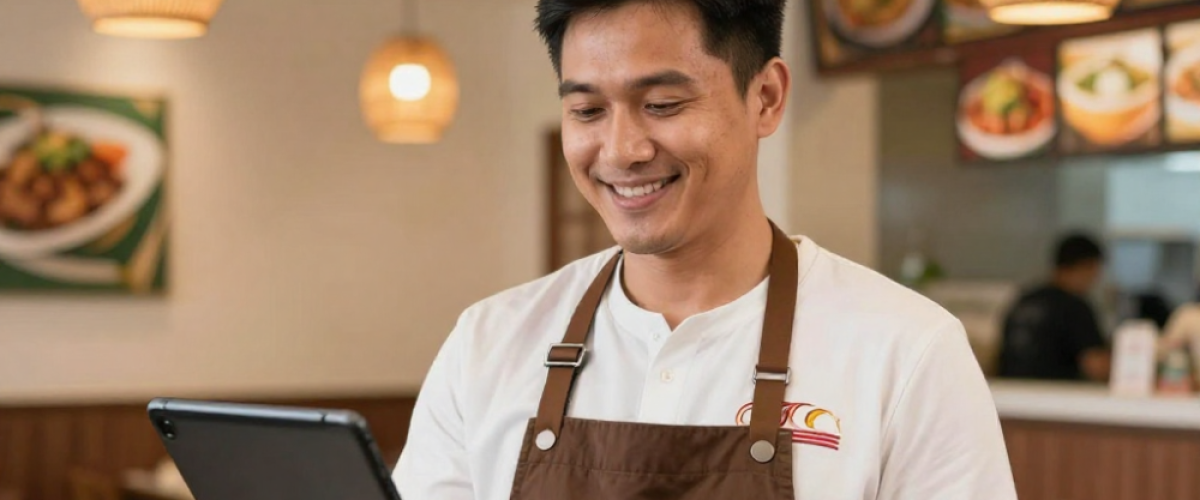
Consider a regional cloud kitchen network that implemented Codemax Smart F&B ERP. Within six months, they reported:
- A 15% reduction in food wastage through automated expiry tracking and better batch control.
- Inventory turnover improved by 20%, lowering holding costs and minimizing stock discrepancies.
- Enhanced compliance with food safety regulations, simplifying audit processes and reducing risk.
- Faster order fulfillment times due to synchronized production planning aligned with retail demand.
These measurable outcomes demonstrate how central kitchen ERP systems deliver ROI by optimizing core operations and supporting business growth
Common Mistakes to Avoid in Central Kitchen ERP Deployment
To maximize benefits, F&B operators should avoid:
- Neglecting User Training: A well-planned onboarding program ensures staff embrace new workflows.
- Over customization: Excessive tailoring can complicate upgrades and maintenance.
- Ignoring Data Integration: Failing to connect ERP with other systems limits comprehensive visibility.
- Underestimating Change Management: Stakeholder buy-in is critical for successful implementation.
Partnering with a solution provider experienced in F&B operations, like Codemax, helps smooth the transition and tailor the system effectively.
Embracing Central Kitchen ERP for Future-Ready F&B Operations
Central kitchen ERP systems represent a pivotal advancement for F&B operators seeking operational efficiency, end-to-end traceability, and sustainable growth. Key takeaways include:
- Streamlined production, inventory, and order management prevent costly waste and errors.
- Integrated traceability supports food safety compliance and rapid issue resolution.
- Automation of stock ordering and batch scaling drives cost savings and consistency.
- Data-driven insights empower agile decision-making and long-term scalability.
As the F&B industry evolves, embracing digital transformation with solutions like Codemax Smart F&B ERP positions central kitchens to thrive in a competitive market landscape. Learn how Codemax Smart F&B ERP can help optimize your F&B operations and unlock new levels of efficiency and traceability.